Google’s new AI Overview (or AIO) is changing how people interact with search results, and businesses everywhere are scrambling to understand what it means for their rankings, traffic, and content strategy.
As a leading international seo agency, UniK SEO has been closely monitoring this shift and its impact on our clients across industries worldwide.
AI is becoming central to online discovery, and we’re helping brands not only survive this shift but lead it. Our AI-first SEO approach blends advanced content strategies with authority-building techniques to position your website exactly where AIO is looking for answers: at the top of the trusted source list.
In this post, we’ll break down what Google’s AI Overview is, how it works, and—most importantly—what it means for your SEO strategy in 2026 and beyond.
What is Google’s AI Overview, and How Does it Work?
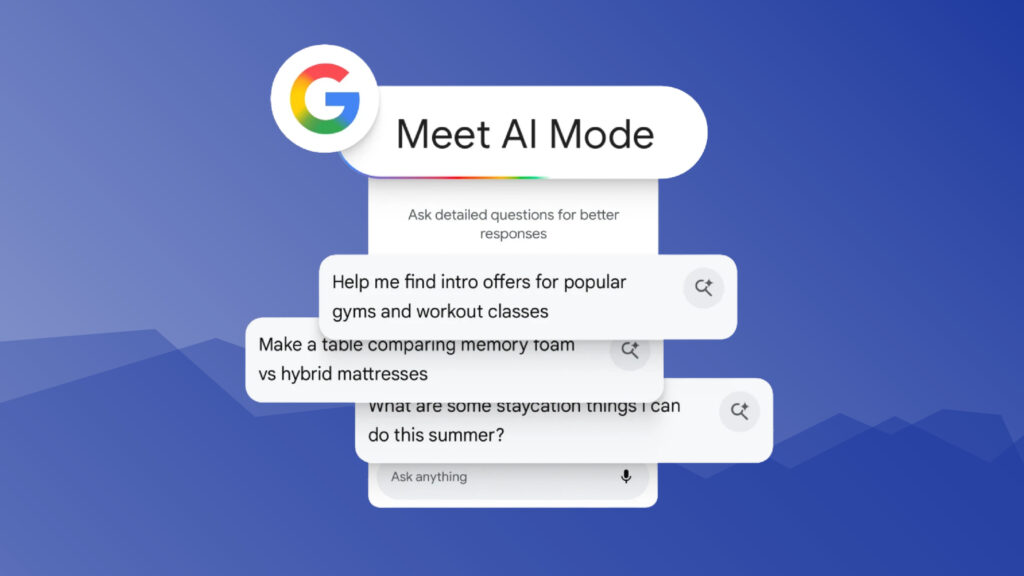
AI Overview is part of Google’s Search Generative Experience (SGE), which integrates generative AI directly into search results. Instead of simply showing you a list of links, Google’s AI now creates a summary at the top of the page that answers your query using information gathered from multiple sources.
Here’s how it works:
- You type a query (e.g., “best hiking boots for flat feet”);
- Instead of just product pages or blog posts, you’re shown an AI-generated paragraph summarizing the key points;
- Underneath, Google cites sources with small link cards that users can click on to verify or explore further.
For searchers, it’s about getting faster, more useful answers. For brands and SEO consultants, it’s a game-changer.
Key Differences Between AI Overview and Traditional Search Results
To understand the impact, let’s break down the main differences between AI Overview (AIO) and the traditional Google results page:
- Results Format: Traditional search displays a list of “10 blue links” and sometimes a featured snippet. In contrast, AI Overview provides an AI-generated summary that blends insights from multiple sources, accompanied by clickable citations;
- Website Visibility: In traditional search, websites appear prominently in ranked positions. In AI Overview, your website may still be cited, but the link is typically embedded within or underneath the summary, reducing its visual prominence;
- User Interaction: With classic search, users actively click on links to find information. With AIO, users often find what they need directly in the AI summary, which reduces the need to click;
- SEO Control: SEO professionals have more direct influence over traditional search rankings through on-page SEO, backlinks, and technical optimization; AIO adds an extra layer—AI interpretation—which means visibility now depends more on how trustworthy, relevant, and clear your content is.
With AIO, Google becomes the middleman, summarizing your content instead of just linking to it. This might make search faster for users, but also reduces the need to click, which brings us to the next point.
How AI Overview Might Affect Organic Traffic and Click-Through Rates (CTRs)
There’s no easy way to say this, so here goes—click-through rates (CTRs) are at risk.
Since AIO delivers instant answers, users might not feel the need to visit a website at all. For informational queries, especially (like definitions, how-tos, and product comparisons), this could mean a significant drop in organic traffic even if your content is still “featured” in the AI’s summary.
According to recent findings, organic click-through rates can drop by up to 34.5% when AI Overviews are present in search results.
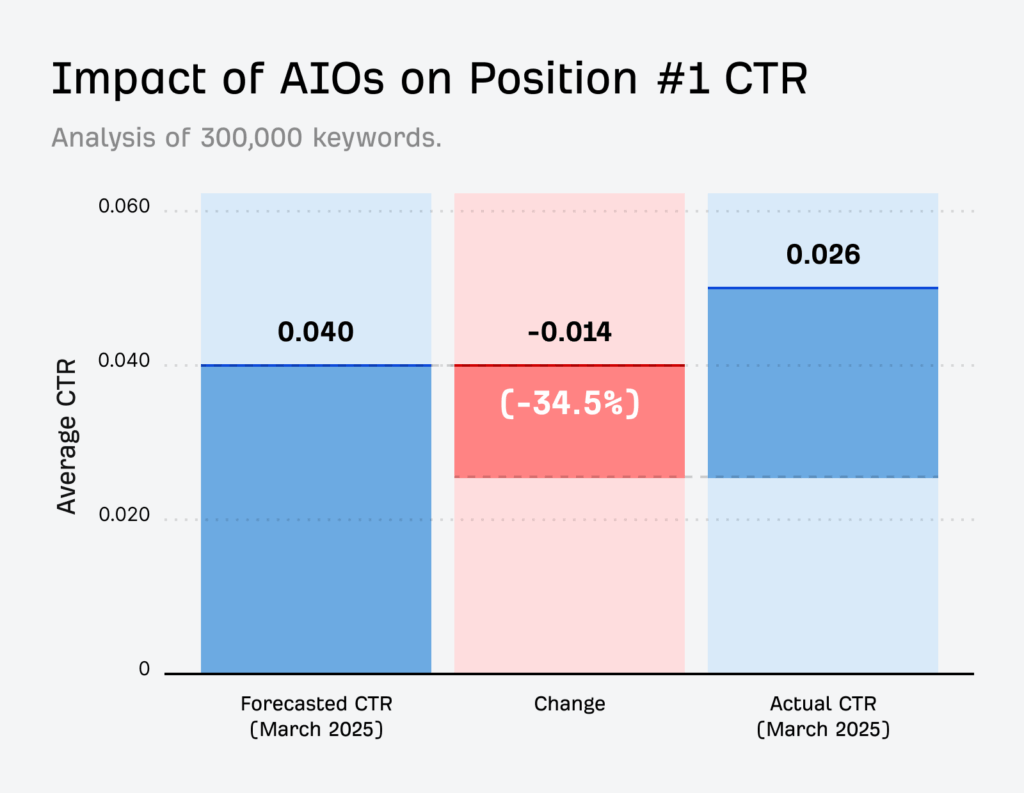
At UniK SEO, we’ve already seen this trend materialize across multiple industries.
Traditional SEO metrics—rankings, exact keyword targeting—are losing their direct influence on traffic. Now, AI favors websites it deems reliable, relevant, and structured enough to quote directly.
However, it’s not all bad news. For branded content, long-tail keywords, and high-intent searches (like “buy organic coffee Lisbon”), users are still clicking through.
Plus, being cited in the AI Overview can build authority and trust, even if the traffic is leaner.
What It Means for Content Creators and SEO Professionals
The introduction of AIO means that the value of content is shifting.
Content is no longer just about ranking—it’s about being used. If the AI chooses your page as a reliable source, it can be cited in multiple summaries, giving you brand exposure and credibility.
That said, the requirements for that to happen are becoming stricter:
- Your content must be accurate, well-structured, and clearly written;
- It should demonstrate expertise, experience, authority, and trust (EEAT);
- It should answer specific user queries in a way that’s easy for AI to parse and summarize.
Why Being a “Referenced Source” Matters More Than Ranking #1
AI engines don’t care if you’re in the top spot—they care if you’re trustworthy.
Google’s AI Overview and tools like Bing Chat and ChatGPT choose sources based on authority, clarity, and structure, not just search engine position, which is why AEO (Answer Engine Optimization) and GEO (Generative Engine Optimization) are now central pillars of UniK SEO’s methodology.
How to Adapt Your SEO Strategy for AI-Powered Search
Now’s the time to evolve. If you want to remain visible in the AIO world, here’s what to focus on:
1. Write for the Summary
Think of your content as something the AI could quote. Use clear headings, concise answers, and structured data to make your content easier to digest.
2. Double Down on Topical Authority
Being “a source” in AIO depends on whether Google’s AI trusts you. Build trust by thoroughly covering your topic, publishing supporting content, and linking to relevant internal resources.
3. Optimize for User Intent
Traditional keyword stuffing won’t work anymore. AIO favors content that matches natural language questions and delivers real value. Use FAQs, “People Also Ask” sections, and conversational copy.
4. Invest in Author Profiles and EEAT
Google’s AI is looking for reliable sources. Show credentials, link to author bios, cite sources, and update your content regularly to reflect new developments.
5. Don’t Abandon Technical SEO
Page speed, structured data, mobile usability, and crawlability are still crucial. In fact, clean code and well-structured schema markup can help AI better understand your content.
6. Prioritize AI-Optimized Content
- Write direct answers to actual user questions;
- Break content into short sections, bullet points, and headings that AI can easily scan;
- Use schema.org structured data to help AI understand the context and content.
7. Advanced Link Building Still Matters
- Despite the decline in clicks, high-quality backlinks remain one of the most important trust signals used by AI;
- At UniK SEO, we focus on digital PR, guest posting, and skyscraper content to build your brand’s authority in the AI ecosystem.
8. Monitor Your AI Visibility
- Don’t just track SERP rankings—track where your content appears across AI summaries, snippets, and chat interfaces;
- Use tools like Google Search Console, Bing Webmaster Tools, and performance dashboards to adjust tactics in real time.
Google’s AI Overview is only one piece of a much broader shift.
The same users who now read AI-generated summaries on Google are also asking ChatGPT, Gemini, Claude, and Perplexity for recommendations — and those platforms rarely surface the same brands in the same order.
Adapting to AIO therefore means going beyond the SERP and understanding how your brand is represented across every major LLM.
If you want a practical framework for that, our step-by-step guide on how to audit brand visibility on LLMs covers the prompts, scoring criteria, and competitor benchmarks you can start using today.
Building Brand Authority for the AI Era
In AI-powered search, your brand echo matters. It’s not just about being linked—it’s about being mentioned, cited, and recognized by both humans and algorithms. At UniK SEO, we strengthen your brand authority through:
- Educational content that positions you as an industry expert;
- Mentions on high-trust domains (.gov, .edu, top-tier publishers, etc.);
- Social signals and shareable content;
- Wiki-style authority presence (where relevant).
AI Overviews rely on brands with digital credibility, and we know how to build it.
The Future of SEO in an AI-First Search Experience
AI is expanding, but this isn’t the end of search—it’s the start of a smarter, more contextual way of navigating the web. At UniK SEO, we believe that AIO won’t kill SEO, but refine it.
The agencies and businesses that succeed in this new environment will be the ones who:
- Understand how AIO works;
- Create helpful, human-first content;
- Adapt to changes quickly.
This is why working with an experienced SEO agency in Portugal, like UniK SEO, can make all the difference. We stay on top of algorithm updates, AI developments, and emerging trends so your website doesn’t just survive, but also thrives.
Final Thoughts
Google’s AI Overview represents a major shift in how users find and interact with online content. While it poses challenges, especially in terms of traffic and CTRs, it also opens new doors for those who are ready to adapt.
By refining your content strategy, building authority, and understanding how AIO changes the game, you can continue to succeed in search.
Need help preparing your SEO strategy for this new era of AI-powered search? Let UniK SEO guide you through it. Book your free consultation today and let’s build your visibility together.